

Creating an AI Platform for Regulated Medical Content

The Challenge
How do you enable content teams to safely and effectively use AI in a regulated environment without sacrificing brand integrity, compliance, or workflow efficiency?
The Solution
Designed an AI-assisted writing tool that worked collaboratively with users instead of replacing them. The experience combined brand-specific knowledge and regulatory guardrails with a workflow that kept copywriters in control, helping teams unfamiliar with AI feel more supported, confident, and efficient in their process.
Research
Understanding the Problem
Pharma copywriters are under pressure to move faster while maintaining strict brand and regulatory compliance. Existing AI writing tools felt too generic, produced unreliable outputs, and didn’t align with the highly collaborative review process that medical, legal, and regulatory teams require.
Research Methods
-
Competitive analysis of emerging AI writing tools
-
Stakeholder interviews with copywriters and creative leads
-
Review of common pain points around trust, compliance, and adoption of AI tools
Key Insights
-
Writers wanted AI to support ideation, not replace decision-making
-
Users were hesitant to trust AI-generated copy without visibility into source material
-
Maintaining brand voice and regulatory alignment was critical
-
Teams unfamiliar with AI needed guardrails and transparency to feel comfortable integrating it into their workflow
Synthesis
Once the research started coming together, the challenge shifted from:
“How do we generate content?” to “How do we design an AI experience that people actually feel comfortable using?”
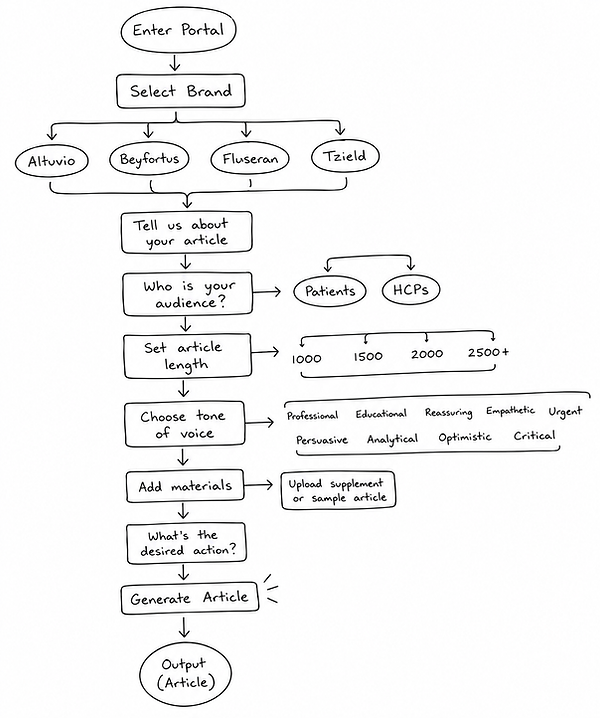
I created a user flow to help guide copywriters through the article creation process instead of a simple chat interface whioch they found to be easy, but opaque and less trustworthy.
I don't need a magic wand, I just need it to understand the data that isn't public knowledge and the brand regulations
"
"
Wireframes
Onboarding Flow
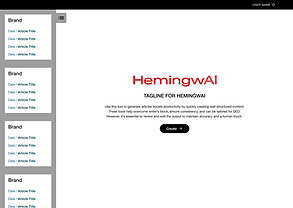
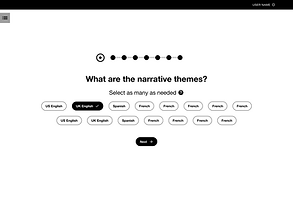
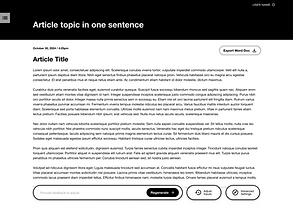
My initial approach used a traditional onboarding flow that guided users through the process one step at a time. While straightforward, it required too many sequential steps before users could actually generate content, making the experience feel slower and more tedious than intended.





Usability Testing
Once I had a framework that stakeholders & dev team approved, I tested the tool with real copywriters who would potentially use the tool in the future.
Testing Session Goals
-
Understand current writing process and AI tool usage
-
Evaluate clarity and completeness of article creation
-
Assess ease of navigation and task flow
-
Gather feedback on usefulness, missing features, points of friction and likelihood of tool adoption
Testing Methodology
-
Participants: 5 Agency copywriters
-
Format: 45-minute individual sessions via Microsoft Teams
-
Stimulus: Pre-production prototype on desktop devices

Testing Synthesis
-
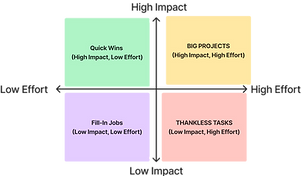
Created affinity map and effort/impact matrix to determine key findings and next steps to advance the MVP


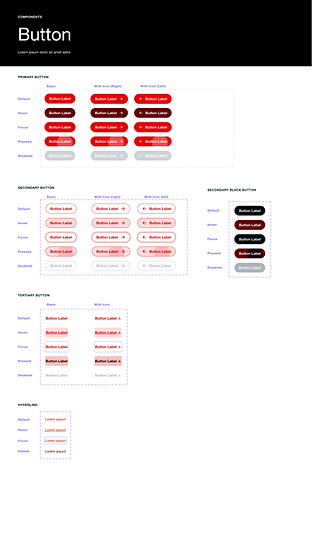
Design System & UI


Key Optimizations
1. Reduce User Confusion
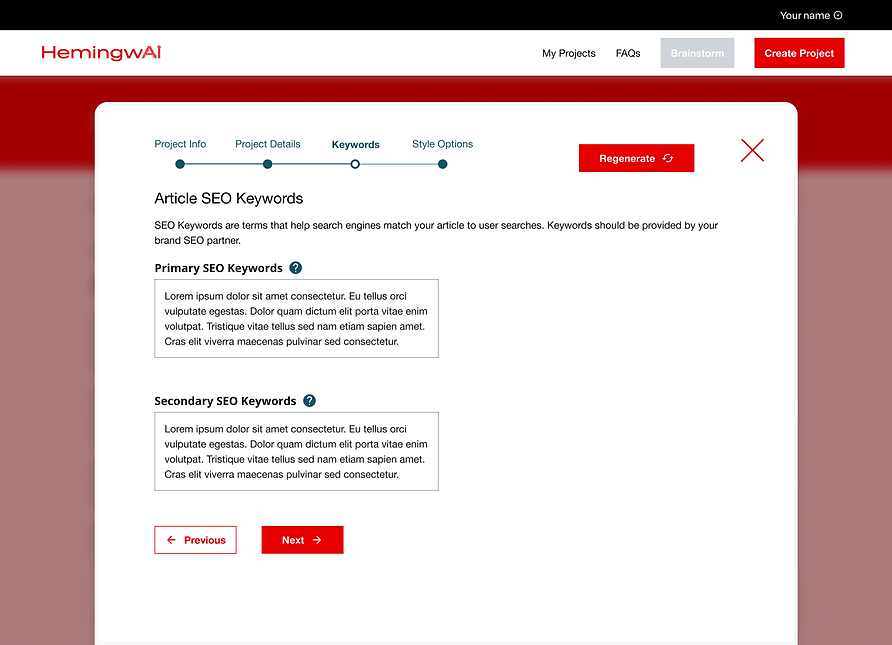
The experience was redesigned to remove moments of hesitation and uncertainty throughout the product. By clarifying labels, simplifying key flows, and creating stronger visual distinction between actions and errors, users were able to navigate the platform more intuitively and move through tasks with greater confidence.

2. Support Creative Exploration
Users wanted a less structured way to ideate before generating final marketing copy, so we created a brainstorm flow to bypass the steps and direct users directly to an open article creation free chat option.

3. Make AI Outputs Easier to Edit
Users emphasized the need for simple editing tools to adjust AI-generated content, building trust and usability.

4. Provide More Guidance
Additional prompts, sample outputs, and best practice examples would help users maximize the tool’s potential, especially for copywriters with limited AI experience

Final Thoughts & Reflections
1.
What Was Delivered
Designed a high-fidelity prototype that transformed a traditionally rigid writing workflow into a more intuitive, collaborative experience. Deliverables included user flows, wireframes, interaction patterns, and clickable prototypes ready for development.
2.
Product Impact
The redesigned experience aimed to reduce friction throughout onboarding and content creation, making AI-assisted writing feel more approachable and transparent for users unfamiliar with AI tools. The overall system was designed to increase confidence, efficiency, and long-term engagement.
3.
Key Learnings
This project reinforced the importance of user-centered design and the value of iterative testing. Collaborating closely with stakeholders highlighted the need for clear communication and adaptability throughout the design process
4.
Looking Ahead
Future iterations could include live collaborative editing, adaptive writing guidance based on brand rules, and post-launch usability testing to further refine the experience and measure engagement over time.